Wednesday, September 11, 2013

Uzziah the King-Priest

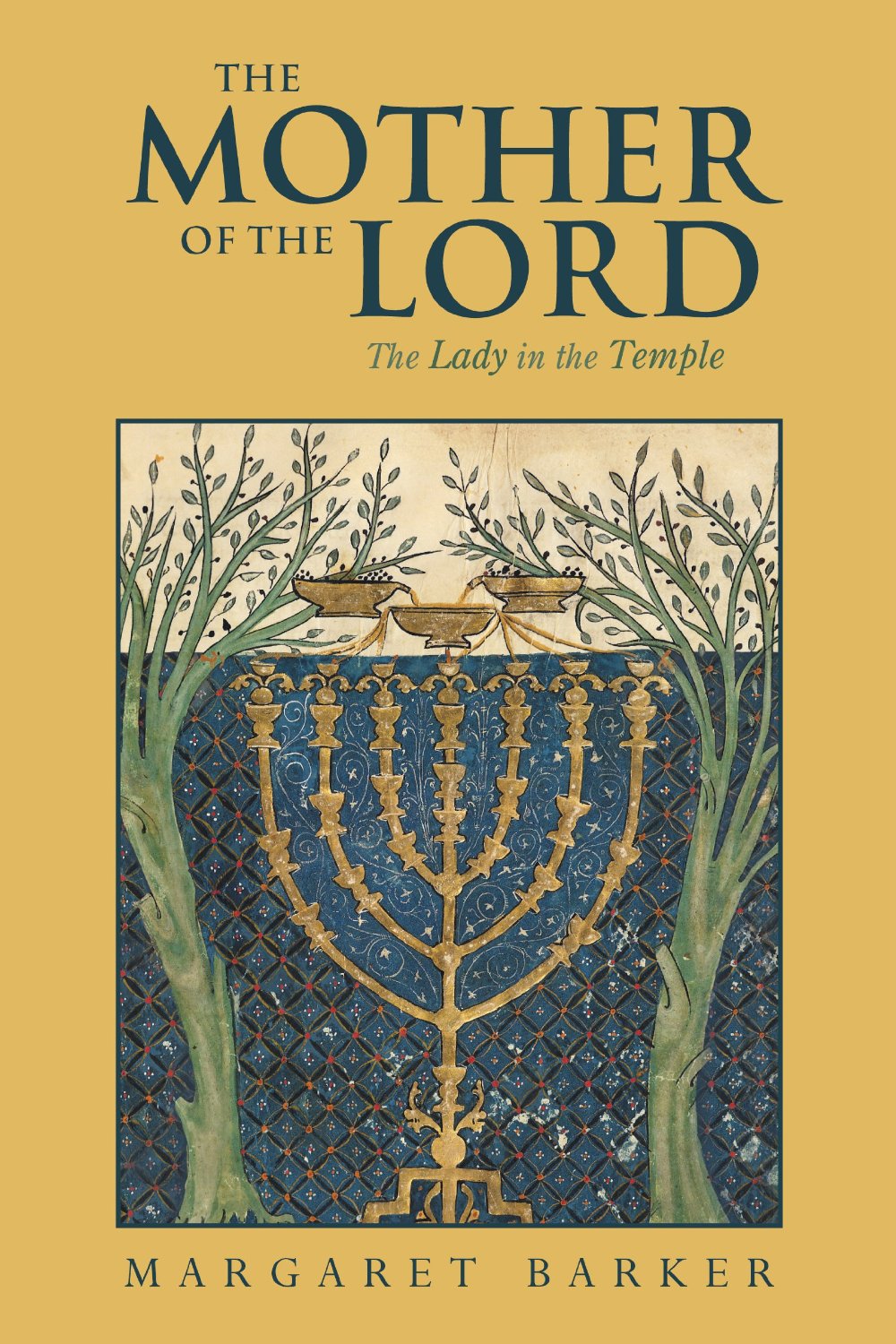
Currently I am slowly making my way through Margaret Barker's most recent book The Mother of the Lord Volume 1: The Lady in the Temple where she makes an interesting assertion which I wanted to note here.

In several of her books she argues that the ancient Israelite kings were also Melchizedek priests who were adherents of a more ancient tradition than the one that is dominantly portrayed in the Bible. Sometime in the 8th century BC a movement lead by a group scholars have named the "Deuteronomists" redacted the Hebrew Bible and "cleansed" the older tradition of elements they disagreed with. They emphasized the Mosaic tradition, were hostile to the monarchy and promoted the power of the Aaronic priesthood.

The King Uzziah Stricken with Leprosy, byRembrandt, 1635.
One of the kings of Judah during this time was named Uzziah (aka Azariah). 2 Chronicles 26 records that Uzziah clashed with the Aaronite priests (led by the high priest, also named Azariah) on one occasion when he entered the temple to offer incense.

Barker suggests that this clash had to do with the ongoing power struggle between the traditional Melchizedek priest-kings and their Aaronic priest rivals. This is what she says on page 90:

"Did the conflict with Azariah the priest mark the moment when the older royal priesthood lost its power to the rising influence of Deuteronomy, Moses and the Aaronites? Was this the moment when Wisdom and the older ways began to fade from Jerusalem and to be replaced by exclusive emphasis on the Law (Deut 4.6)?...

"According to the Chronicler, Uzziah entered the temple to burn incense and was pursued by Azariah the high priest and 80 warrior priests - 'men of valour' (2 Chron. 26.17). This was a major confrontation over the roles of the chief priests and the king, since Azariah claimed that only the sons of Aaron could burn incense (2 Chron. 26.18)."

Monday, July 15, 2013

William Hamblin On the Esoteric


Last week the Deseret News published a column by Bill Hamblin and Dan Peterson on the esoteric in religion. It is very interesting and well worth reading. You can read the column by clicking here.

Wednesday, July 10, 2013

2013 "Lady of the Temple" Conference

Some exciting news was announced this morning by the Academy for Temple Studies. Pasted below is the announcement they emailed out this morning:


"The Academy for Temple Studies and the Utah State University Religious Studies program announce a conference we believe may be of interest to you, to be held on Wednesday, October 23, 2013, on the campus of Utah State University.  We invite you to save the date.
"THE LADY OF THE TEMPLE:  EXAMINING THE DIVINE FEMININE IN THE JUDEO-CHRISTIAN TRADITION

"Registration for the day-long conference will be $50.00. Students with a valid student ID will be admitted for $10.00.
 
"Seating will be limited.

"You can register on-line at this link.
https://secureinstantpayments.com/sip/cart/event.php?EID=1003"

 The impressive line up of speakers includes the following:
  • Margaret Barker
  • Laurence Hemming
  • Bill Dever
  • Alyson Von Feldt
  • Valerie Hudson

Monday, July 1, 2013

The Mysteries of Solomon's Temple


This past weekend Professor Bill Hamblin gave a fireside presentation entitled "The Mysteries of Solomon's Temple". Here is a link to a copy of the slides from his presentation.

Sunday, May 19, 2013

Noah


The Lord Fulfilleth All His Words, by Clark Kelley Price
The account of the prophet Noah as found in Genesis is a fascinating and generally misunderstood pericope which is highly symbolic and recapitulates the story of the creation and the fall. Jeffrey Bradshaw has written some very insightful material on the symbols behind the Noah story which can be found in his books and in  Meridian Magazine. Bradshaw points out a number of parallels between the creation story and the flood. In this post I will mention just a few for the sake of brevity. Additionally, Bradshaw sheds light upon the troubling story of Noah's drunkenness which seems out of character for a prophet of God. As we will see this account as it has come down to us has been subject to misunderstandings and mistranslations and when understood properly does not need to cause concern.

Creation

Ancient Hebrews conceived of the existence of a primordial sea of chaos out of which creation emerged. According to this conception the first piece of ground to emerge from chaos was the primordial hillock. Mount Moriah in Jerusalem, upon which the 1st and 2nd temples were built, was associated with this primordial hillock by the Israelites. The primordial hillock was also associated with the Garden of Eden and was considered the axis mundi or the point at which heaven and earth were joined.

Bradshaw writes that the ark built by Noah was designed as a temple with its three decks corresponding to the three areas (most holy place, holy place and outer court) of the Jerusalem temple. He also points out that other than the tabernacle and temple the ark is the only structure mentioned in the Bible whose design was revealed through revelation. 

Genesis 8 states that after drifting across the water the ark came to rest on the mountains of Ararat. Ararat is depicted as the primordial mountain upon which the ark/temple rests just as the temple sat upon Mount Moriah. The animals and Noah's family leaving the ark to re-populate the earth can be likened to the placing of animals and man on the earth at the creation. Upon leaving the ark the command to "multiply and replenish the earth" was renewed with Noah and his family as it was originally given to Adam and Eve in the Garden of Eden. (compare Gen. 1:28Gen 8:17)

Noah's Tent

The story of Noah's drunkenness within his tent is found in Genesis 9:20-27 and many have supposed this incident to be a moment of indiscretion by an otherwise righteous prophet. However, there may be more to the story than is suggested by our modern English translations of the Bible. Bradshaw cites the writings of Rabbi Shim'on in the Zohar where he explains that Noah's tent is to be understood as the tent of the Shekinah or the Divine Presence of Jehovah. This tent, built at the foot of Mount Ararat, therefore, is analogous to the portable Tabernacle which Moses built at the foot of Mount Sinai. (ref)


Tissot, Noah in Vision
What, then are we make of Noah's being drunken and uncovered in the tent? Bradshaw mentions a statement attributed to Joseph Smith in which the prophet explained that Noah was not drunk but was in a vision. Bradshaw's article also cites the Genesis Apocryphon which describes Noah and his family engaging in a ritual drinking of wine after which Noah is shown a vision in which he sees the destiny of his posterity. Therefore, as Bradshaw explains "Noah's drinking of the wine should be seen in a ritual context and not merely as a spontaneous indulgence that occurred at the end of a particularly wearying day." (ref)

Noah's nakedness can be explained by looking at the example of Saul when he joined Samuel's group and "stripped off his clothes also, and prophesied before Samuel in like manner, and lay down naked all that day and all that night." (1 Sam. 19:24) Bradshaw cites Robert Jamieson who explained that Saul's nakedness in this instance means that he was “divested of his armor and outer robes." (ref)

Hugh Nibley has offered another explanation that the nakedness of Noah referred to the priestly garment which he wore which was the garment of skins given to Adam which had been passed down through the generations. Nibley goes on to explain that Ham either stole the garment from Noah or made a copy of it. (Collected Works of Hugh Nibley, Vol.5, pp. 169-170). If this was the case then it would appear that Ham was cursed because he intruded into the sanctuary tent while his father was enwrapped in vision dressed in his priestly vestments. Ham then made an unauthorized copy of the garment and claimed priestly authority by virtue of possessing the counterfeit. 

Understanding the account of Noah in light of the information Jeff Bradshaw has gathered  brings greater appreciation for this story and dispels the more controversial aspects. Additionally, viewing this account in light of the temple creation drama helps the reader understand the account as it was intended to be understood.

Thursday, May 16, 2013

Jachin and Boaz

Model of Solomon's temple showing the two pillars,
Jachin and Boaz.
One feature of the temple of Solomon was a set of brass pillars which sat in the ulam (אוּלם) or porch of the temple at the entrance to the holy place. These pillars were known as Jachin and Boaz and there has been a great deal of discussion about the purpose and meaning of the two columns. A description of Jachin and Boaz can be found in 1 Kings 7:13-22 which lists the following characteristics:

- Each was made of cast bronze by Phoenician craftsmen.

- Each were 18 cubits high and 12 cubits in circumference.

- Each was topped with a capital made of cast bronze 5 cubits high and decorated with a pomegranate and lotus motif.

Several theories have been put forth to explain the meaning of the pillars. Margaret Barker has written the following:

"Some have suggested that the pillars represented sacred trees, fertility symbols. There are stylized trees standing on either side of the entrance on several models of shrines which have been unearthed. Another possibility is that they were fire altars, or that they represented the pillar of fire and the pillar of cloud which led the Israelites in the desert." (Barker, Gate of Heaven p.29-30)

Matthew Brown has suggested the pillars represented the king and the Lord and has cited numerous passages from the scriptures to support this idea. (Brown, Gate of Heaven p.117-119)

Another possibility is that the pillars were analogous to the stone obelisks that stood at the entrances to Egyptian temples.

Entrance to the Luxor temple in Upper Egypt. Originally two obelisks stood at the entrance. The other is now located in the Place de la Concorde in Paris, France.
This idea was suggested by Flinders Petrie (ref) and seems possible in light of the close cultural affinity which ancient Israel shared with its neighbor. If this is the case then examining what the obelisks represented to the Egyptians may shed some light on the meaning of Jachin and Boaz.

Obelisks were associated with the sun by the Egyptians and were thought to represent the petrified rays of Aten. The pylons which stand behind the obelisks represented the hills between which the sun rose and represented the horizon. The hieroglyph for the word "horizon" was a depiction of the sun rising between the hills (see below) and could also be translated as "mountain of light". (ref)


In ancient Israel the horizon was connected with the concept of eternity (עולם - olam in Hebrew). The place beyond the horizon was distant and hidden just as eternity was. (ref) The holy place and most holy place in the temple represented this distant, hidden place where God's abode was located. Crossing the threshold from the courtyard into the holy place was crossing from profane to sacred space. Likewise in Egyptian temples. The two pillars were located in the porch or אוּלם (ulam) of the temple. This may have been word play with olam (eternity) as the two words are very similar. Therefore, it seems reasonable to suppose that the two bronze pillars, Jachin and Boaz symbolized the horizon, or the barrier between the temporal world and the eternal world just as the obelisks and pylons did in Egyptian temples.
Monday, May 13, 2013

The Pharisee and the Publican


Recently I re-read the parable found in Luke 18:10-14 commonly known as the parable of the Pharisee and the Publican. It is far and away my favorite parable out of the many found in the New Testament. It makes me think that perhaps I have a chance after all. Here it is:

Luke 18:10-14

 10 Two men went up into the temple to pray; the one a Pharisee, and the other a publican.
  
11 The Pharisee stood and prayed thus with himself, God, I thank thee, that I am not as other men are, extortioners, unjust, adulterers, or even as this publican.
  
12 I fast twice in the week, I give tithes of all that I possess.
  
13 And the publican, standing afar off, would not lift up so much as his eyes unto heaven, but smote upon his breast, saying, God be merciful to me a sinner.
  
14 I tell you, this man went down to his house justified rather than the other: for every one that exalteth himself shall be abased; and he that humbleth himself shall be exalted.

Wednesday, May 1, 2013

BYU New Testament Commentary


Quote from the BYU New Testament Commentary Website:

A group of Latter-day Saint scholars has joined forces to produce a multi-volume commentary on the New Testament along with a new rendition of the Greek New Testament texts. Planned to take several years to complete, this  series will combine the best of ancient linguistic and historical scholarship with Latter-day Saint doctrinal perspectives. 

The first volume is scheduled for release this coming summer and will cover the book of Revelation. Looks very cool. Can't wait to get my hands on a copy.

Wednesday, April 17, 2013

Dead Sea Scrolls coming to The Leonardo

According to KSL the greatest archaeological discovery of the 20th Century is coming to a museum near near you (that is, if you live in the intermountain west)! The Leonardo Museum in Salt Lake City has announced they will be showcasing some of the scrolls along with several hundred other artifacts from the Holy Land sometime in the near future. I had the opportunity to visit the Shrine of the Book in Jerusalem a number of years ago and see many of the scrolls. I look forward to seeing them again. For more information visit KSL.com

Thursday, March 7, 2013

Don Bradley


LDS scholar Don Bradley has an interesting story to tell. His studies of the history of the Church led him out of the Church into atheism and back again. He is now working as one of the editors for the Joseph Smith Papers Project and is finishing up a masters degree in history at Utah State University. Currently, he is working on a book about the lost 116 pages of the Book of Mormon and from what he has spoken about regarding his research the book sounds as though it will be a fascinating read.

Several months ago he sat down for a lengthy interview with the Foundation for Apologetic Information and Research (FAIR). The interview is long but is well worth listening to. It can be downloaded here or on iTunes by subscribing to FAIR's podcast.

Last summer the Salt Lake Tribune ran a story featuring Bradley. The story briefly relates his journey out of the Church and how he found his way back in, but leaves out a lot of the information the FAIR interview covers. The article can be viewed by clicking here.

At the 2012 FAIR conference he delivered a talk entitled "Piercing the Veil: Temple Worship in the Lost 116 Pages." Read his address here.

Lastly, his Sunstone Symposium address can be listened to here.

Tuesday, March 5, 2013

Jeff Bradshaw


Yesterday afternoon I stopped by Benchmark Books and picked up Jeff Bradshaw's commentary on the book of Moses entitled "In God's Image and Likeness: Ancient and Modern Perspectives on the Book of Moses".

I spent a couple hours reading it yesterday and was not disappointed. I have heard him speak a few times and since becoming aware of him have been very impressed by his insights and scholarship. On the sidebar of this blog I have a link to a list of articles he has written for Meridian Magazine. I have read most of them and highly reccomend taking the time to read them carefully.

If Jeff Bradshaw's Moses commentary is out of your price range he has written a couple other books that are reasonably priced including: "Temple Themes in the Book of Moses" and "Temple Themes in the Oath and Covenant of the Priesthood".

Several months ago he spoke at the "Temple on Mount Zion Conference" in Provo. His talk was entitled: "The Ark and the Tent: Symbolism in the Story of Noah". The talk is recorded and can be viewed here. As a caveat I need to warn you that watching him speak is a little like drinking from a fire hose. I always need to pause and rewind to digest what he is saying - it is fascinating.

Saturday, February 23, 2013

Ancient and Modern Temple Parallels

This weekend I put together this short video pointing out a parallel between ancient and modern temples. I hope you enjoy it.